
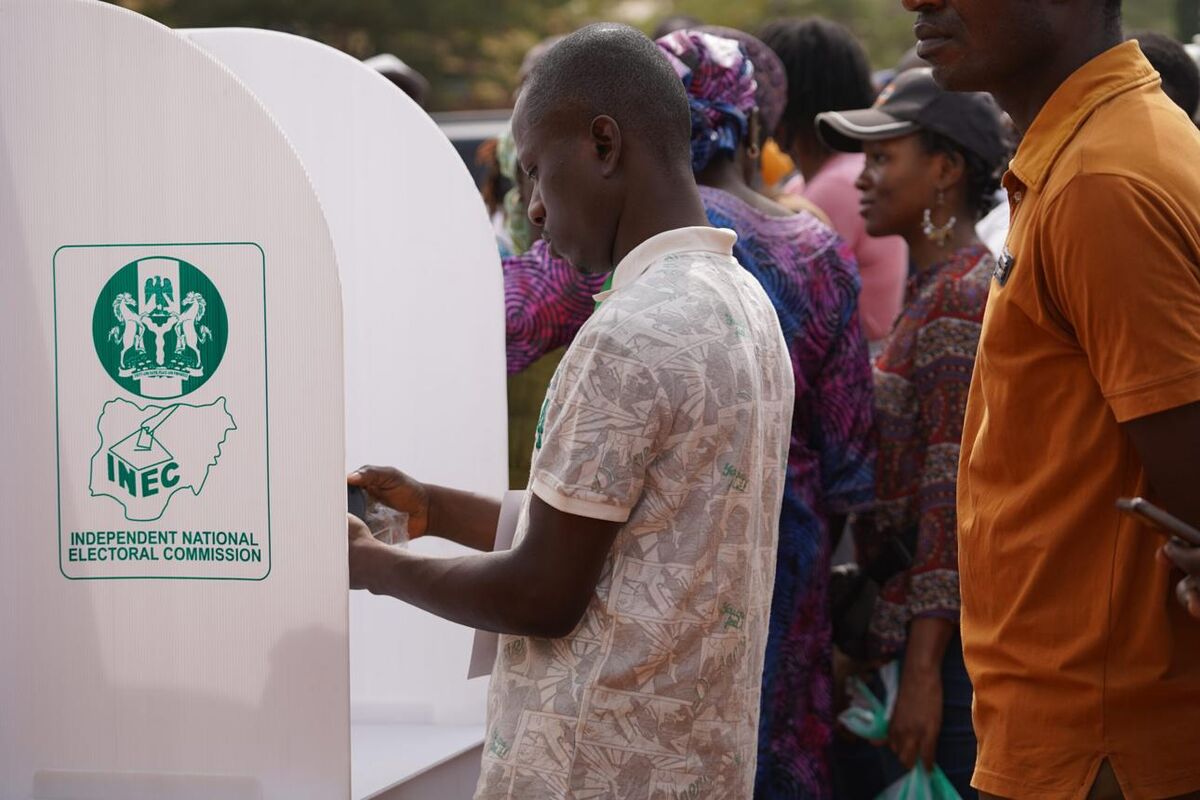
Governance · 03 June 2026
PWDs and the Nigerian Ballot: Structural Exclusion as Electoral Policy
By INP Editorial · 233 views
When we talk about voter apathy in Nigeria, we tend to focus on youth disillusionment or logistical frustration. But for millions of Nigerians living with disabilities, the barriers to participation are not attitudinal — they are structural, physical, and in many cases, legally unaddressed.
Nigeria has approximately 27 million persons with disabilities, according to the National Commission for Persons with Disabilities (NCPWD). Of these, a significant proportion are of voting age. Yet election after election, their participation rates remain among the lowest of any demographic group — not because they choose to stay home, but because the system makes it extraordinarily difficult for them to show up.
What the barriers look like
The problems are well-documented and stubbornly persistent. Polling units are often located in buildings with no ramps, no accessible toilets, and narrow doorways that cannot accommodate wheelchairs. Ballot papers have no Braille component for visually impaired voters. Deaf voters receive no sign language support at polling units. Persons with intellectual disabilities are sometimes turned away by ad hoc staff who are undertrained and under-resourced.
What the law says — and what practice looks like
Nigeria's Discrimination Against Persons with Disabilities (Prohibition) Act of 2019 mandates accessibility in public facilities and equal participation in civic life. The Electoral Act also contains provisions for assisted voting. But legislation without enforcement is decoration. The gap between what the law requires and what happens on election day remains enormous.
What INP demands
INP's 10-Point Agenda treats inclusive participation as non-negotiable. Specifically, we demand that INEC develop and implement a comprehensive accessibility standard for all polling units; that assistive voting materials be available in all states, not just selected ones; and that disability-inclusion training become mandatory for all ad hoc electoral staff.
Persons with disabilities are not a special interest group asking for favours. They are Nigerian citizens exercising a constitutional right. The structural exclusion they face is not an oversight — it is a policy failure that democracy cannot afford.
More from INP Intelligence